
Consumption per site
What each building actually uses, as the basis for setting cycles and quantities.
The cycle generates the round. The stock goes out with the vehicle. Every drop is recorded where it happens — what was left, a photo, a signature, the time and the place — and the round balances at the end of the day.
Vehicle tracking proves the van stopped. It says nothing about the quantity handed over, whether the units were serviced, or who signed. So the month ends in disputed deliveries, credit notes and a van that never quite reconciles.
The answer is a paper note in a branch file, found three days after the client has stopped asking.
Forty went out, twelve came back, and the paperwork accounts for twenty-two. The gap gets written off.
One site runs dry by day nine, another has a cupboard full. Both cost money.
Nobody knows what a building actually uses, so the cycle it was given years ago never changes.
Each site carries its own service frequency, so tomorrow’s round is generated rather than typed out.
What is loaded is issued to that vehicle, against that round.
Stops ordered for the day, with travel captured from the driver’s phone.
Units serviced, consumables left, quantities recorded by item, photos taken — online or off.
The receiver signs on the phone. Where nobody is available, the exception is recorded rather than left blank.
Issued against delivered against returned, per vehicle, per day.
And it works with no signal. Basements and plant rooms sync when the phone is back in range.
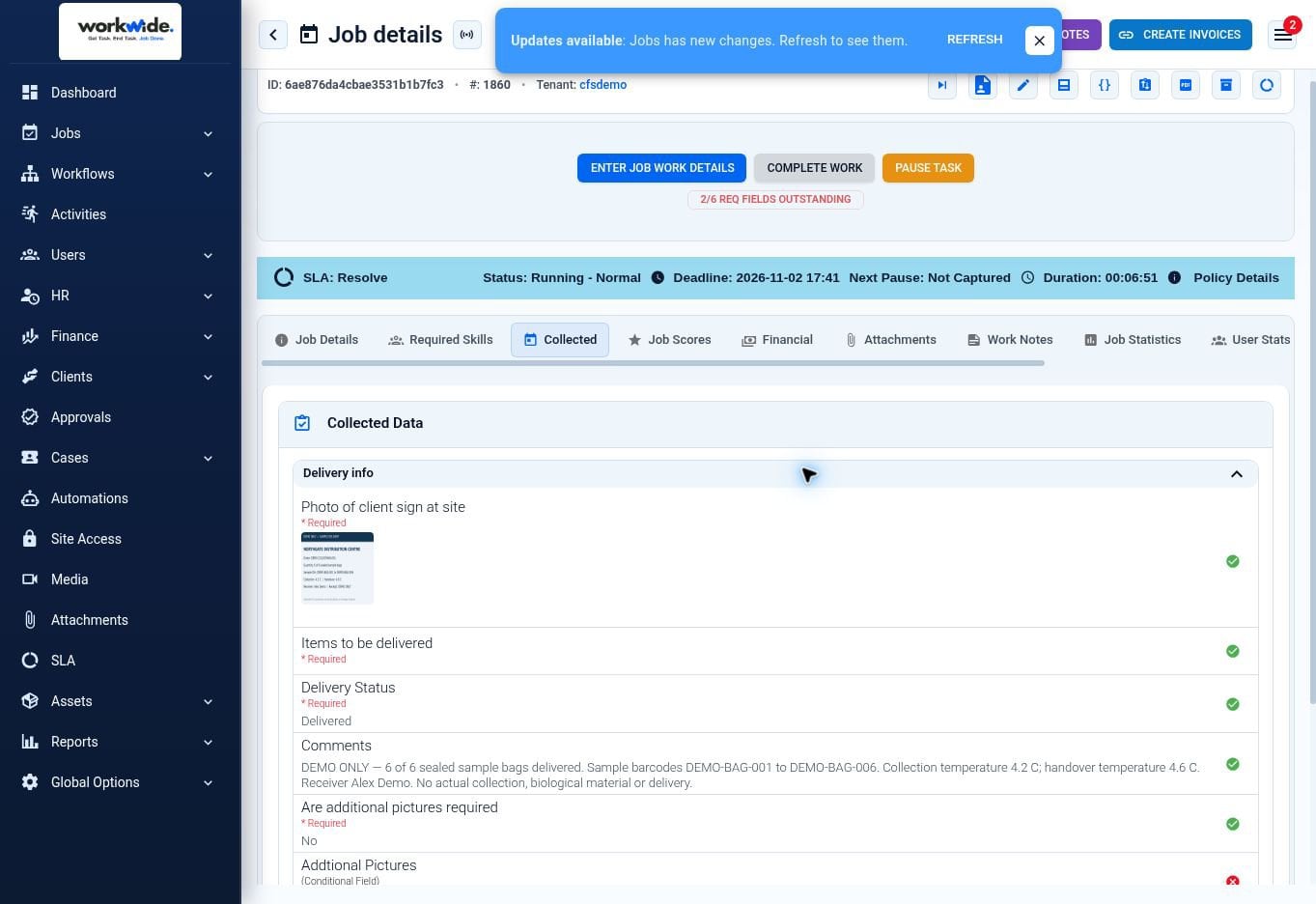
The quantities are recorded at collection.
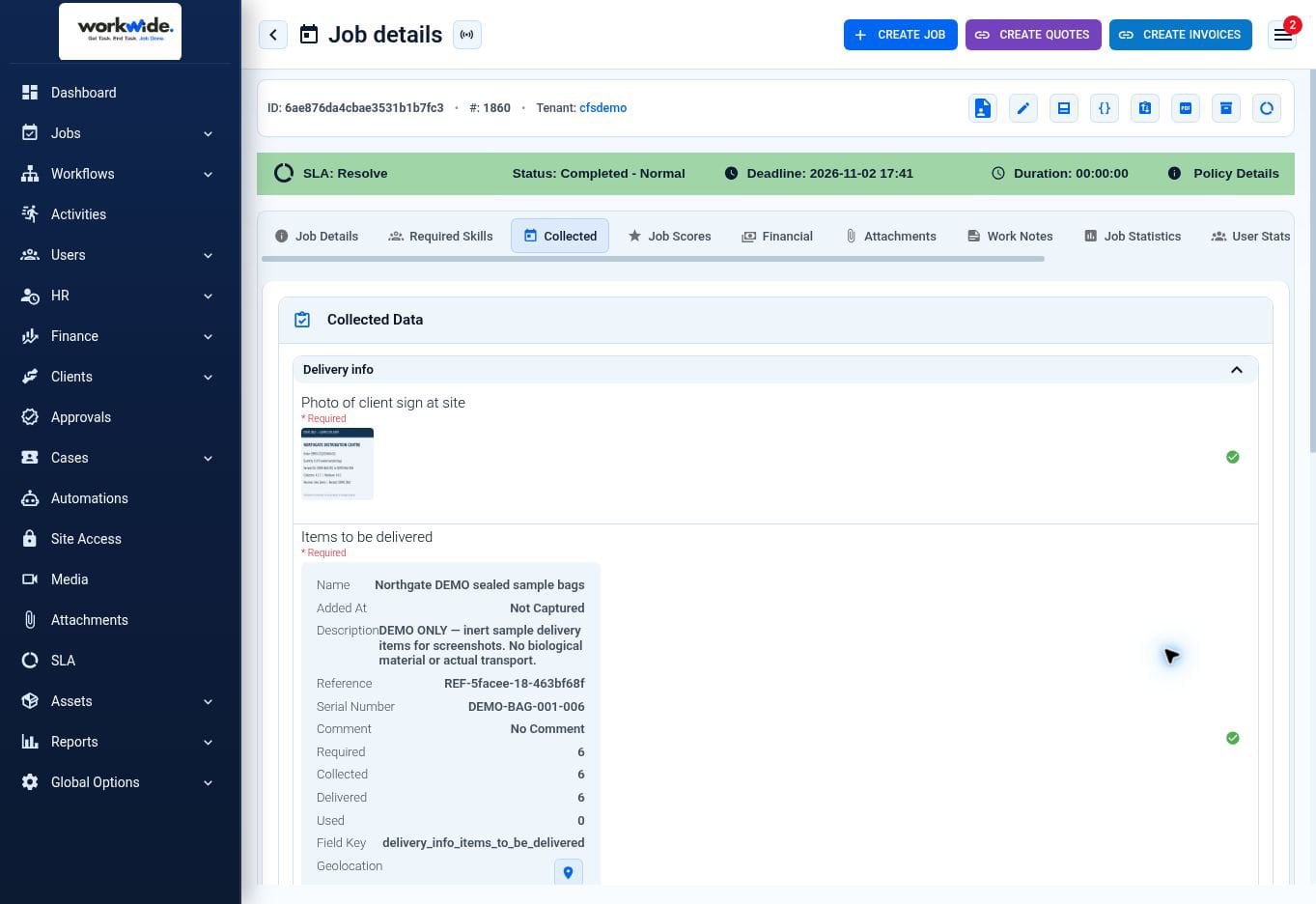
The delivered quantities are recorded when the delivery is completed.
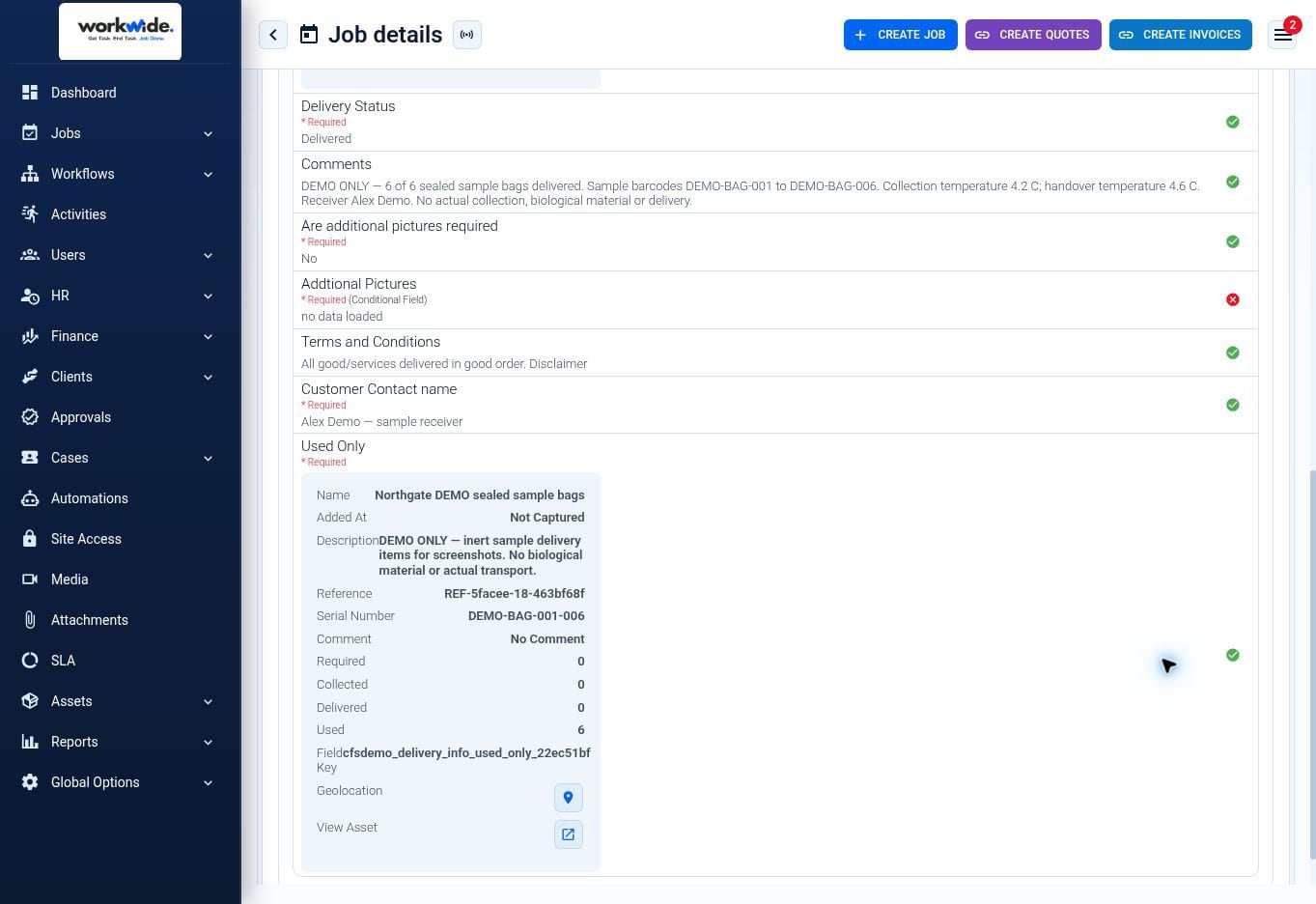
The receiver and their comments are saved with the delivery.
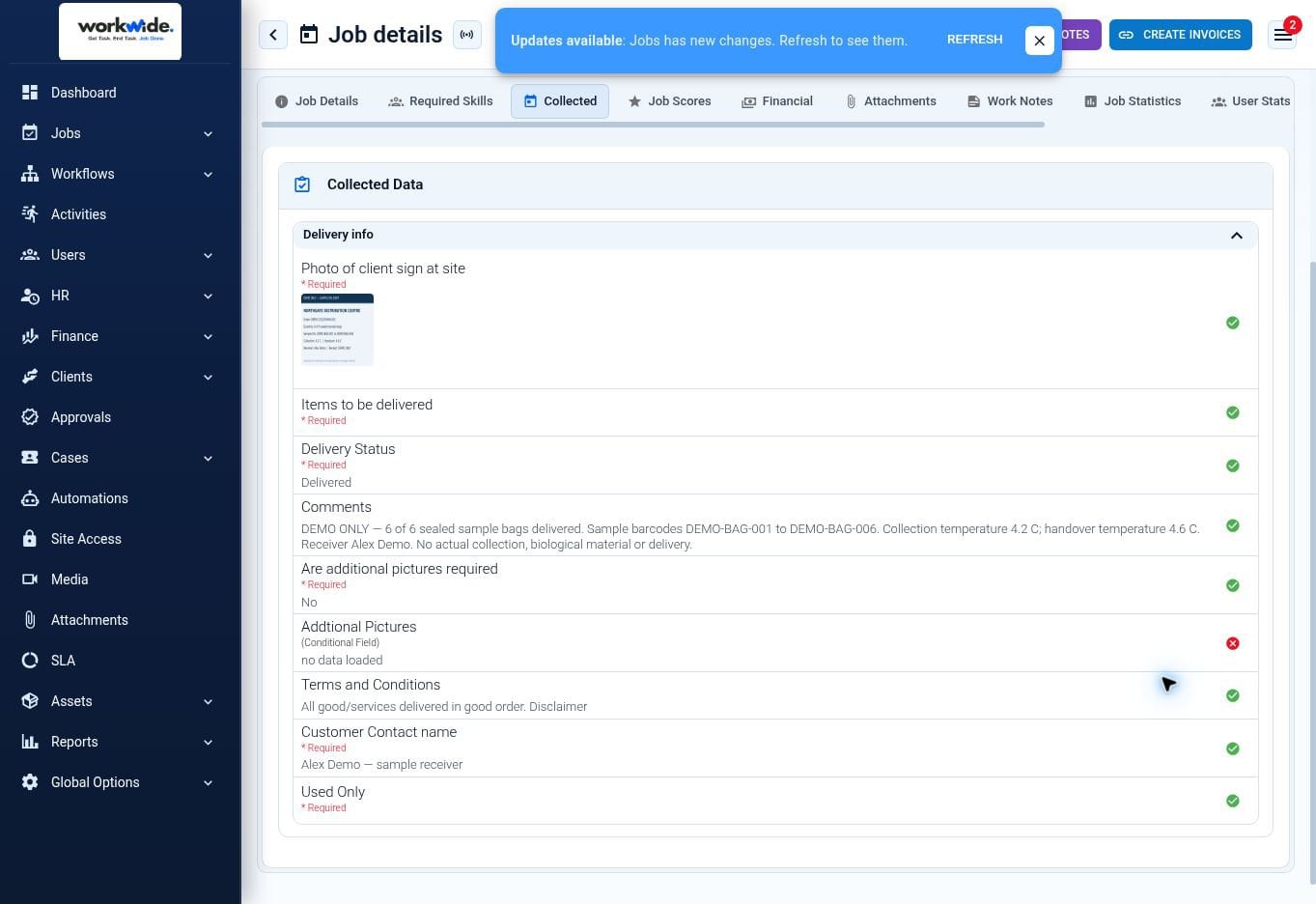
The handover is recorded, so every delivery is proven.
The quantities are recorded at collection.
The delivered quantities are recorded when the delivery is completed.
The receiver and their comments are saved with the delivery.
The handover is recorded, so every delivery is proven.
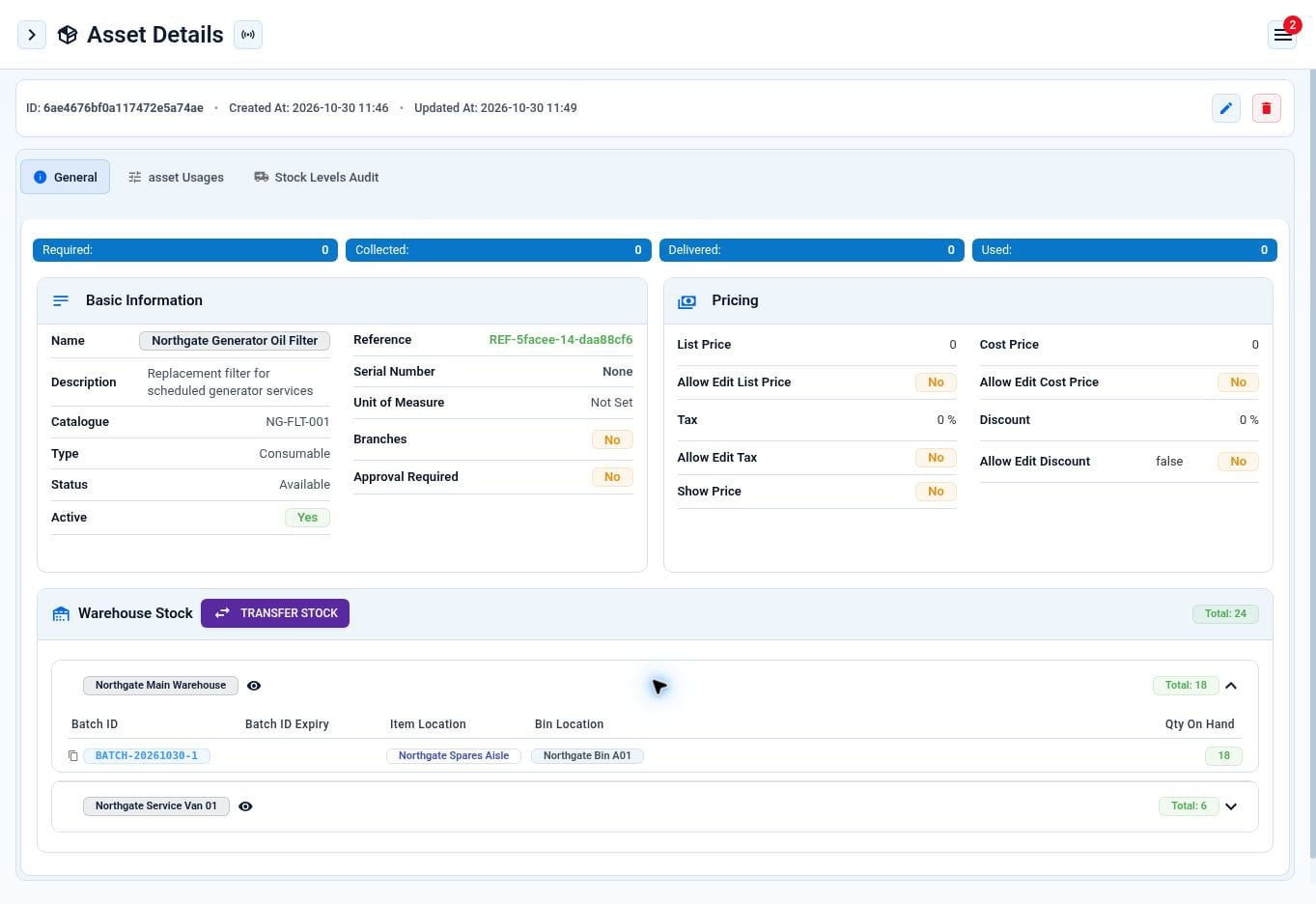
Screens from the WorkWide app and portal, shown with demonstration data.
Tsebo Hygiene service client sites across the country on recurring cycles — replenishment, unit exchanges and servicing on the same visit, with the proof captured at each stop.
client sites served
field staff covering them
tasks managed in twelve months
signed for, timed and located
Around forty-five sites for every person in the field — which is what happens when the round plans itself and the paperwork finishes when the round does.
What each building actually uses, as the basis for setting cycles and quantities.
Issued, delivered and returned per vehicle per day, with variance you can attribute.
What it costs to keep a site supplied, before the contract comes up for renewal.
A disputed drop answered in a minute, with the photo and the signature attached.
Dispensers, sanitary units, fresheners and consumables serviced on a contractual cycle.
Consumables and chemicals delivered to the contracts you already clean.
Janitorial, PPE, packaging and catering disposables on standing orders, off your own fleet.
Refill the machine, service it, and bill on what it used.
Quantities, photos and a signature captured where the handover happens, offline if the building has no signal.
Warehouse to vehicle to site, issued to the round and reconciled when it closes.
Units serviced and stock left on the same stop, not two systems running alongside each other.
Delivered lines flow into invoicing, or into the finance system you already run.
Yes. Rounds are completed offline and sync when the phone is back in range.
Yes — barcode scanning at the stop, or counted quantities where scanning is not practical.
The exception is recorded with a reason and a photo, so a missed stop is visible the same day rather than at month end.
Yes, per site over time — which is what cycles and quantities should be set against.
Yes. Stock sits in warehouses, on vehicles and at sites, and moves between them.
Yes. Delivered lines can be invoiced in WorkWide or passed into the finance system you already run.
No. This is for recurring rounds to the same sites, not parcel distribution with tracking numbers.
If the answer is “we look for the delivery note”, that is the problem.