
Build and installation contractors
FTTx build, customer connections and civils, largely with subcontracted crews.
Work assigned to the right crew, employed or subcontracted. Checklists, photographs, readings and serial numbers captured on the phone, offline if the site has no signal. The restoration clock running while the job is open.
Half the crews are subcontracted, the sites are cabinets and poles and customer premises, and the record of what was actually done is a photograph in a group chat. It works — until somebody invoices, audits, or applies a penalty.
You find out at five o’clock what got done today, and coordinators spend the day on the phone finding out.
A subcontractor invoices for forty joints. You think it was forty.
The as-built says one thing, the ground says another — and every future fault takes longer.
“We restored it Tuesday, around two.” That is not a defence when a penalty is applied.
From your own systems, a client, or a fault — created by integration rather than typed in.
By skill, area and availability, to employed crews and subcontractors alike.
Materials and devices issued against the job, by serial number, before anyone travels.
Checklist, photographs, readings, serial capture and signature — online or off.
On faults, the restoration commitment runs while the job is open, with escalation before the breach.
The result lands against the site and the equipment, the same day rather than the end of the week.
And it works offline. Trenches, basements and cabinets sync when the phone is back in range.
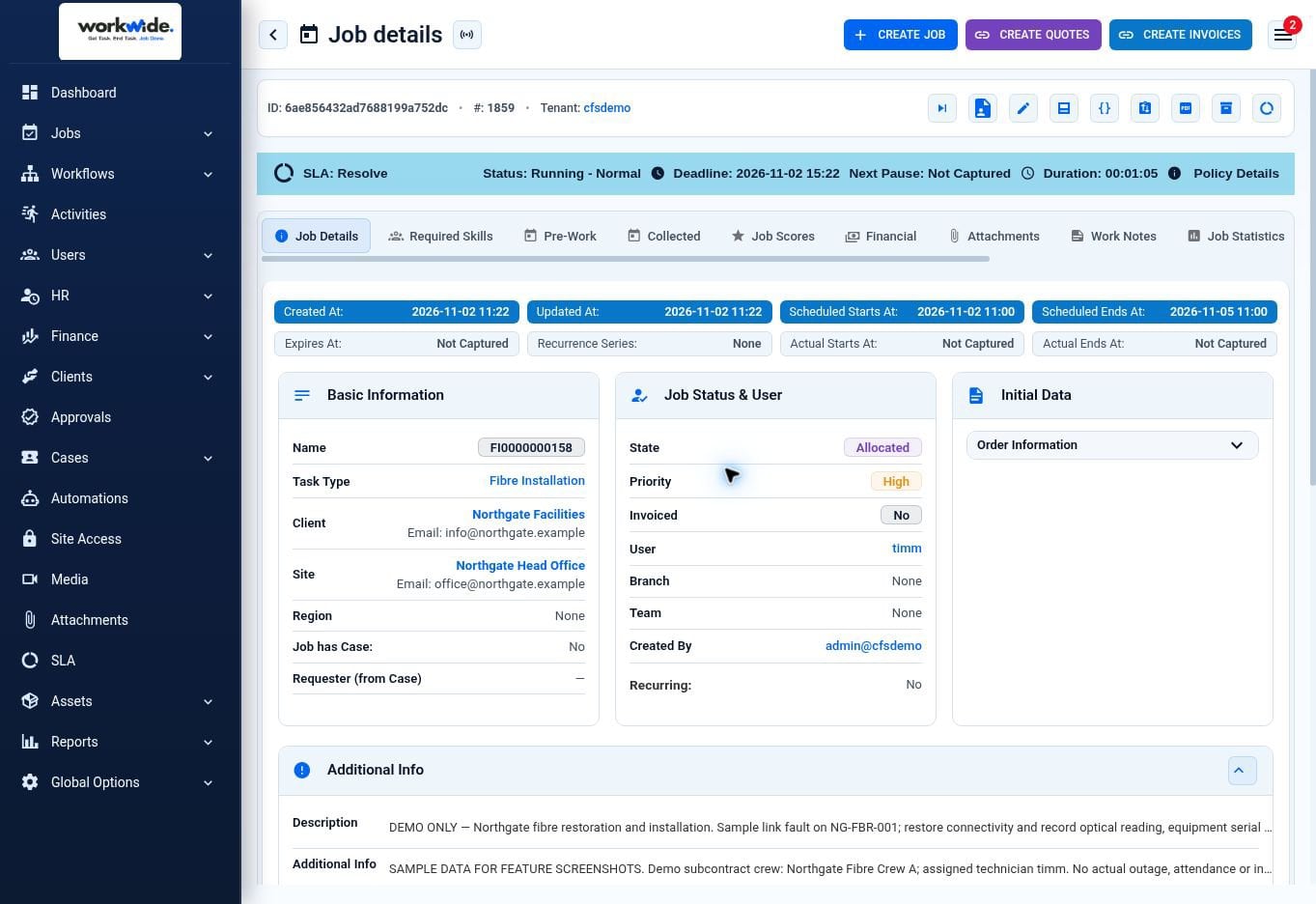
The fibre job carries its SLA from the moment it is logged.
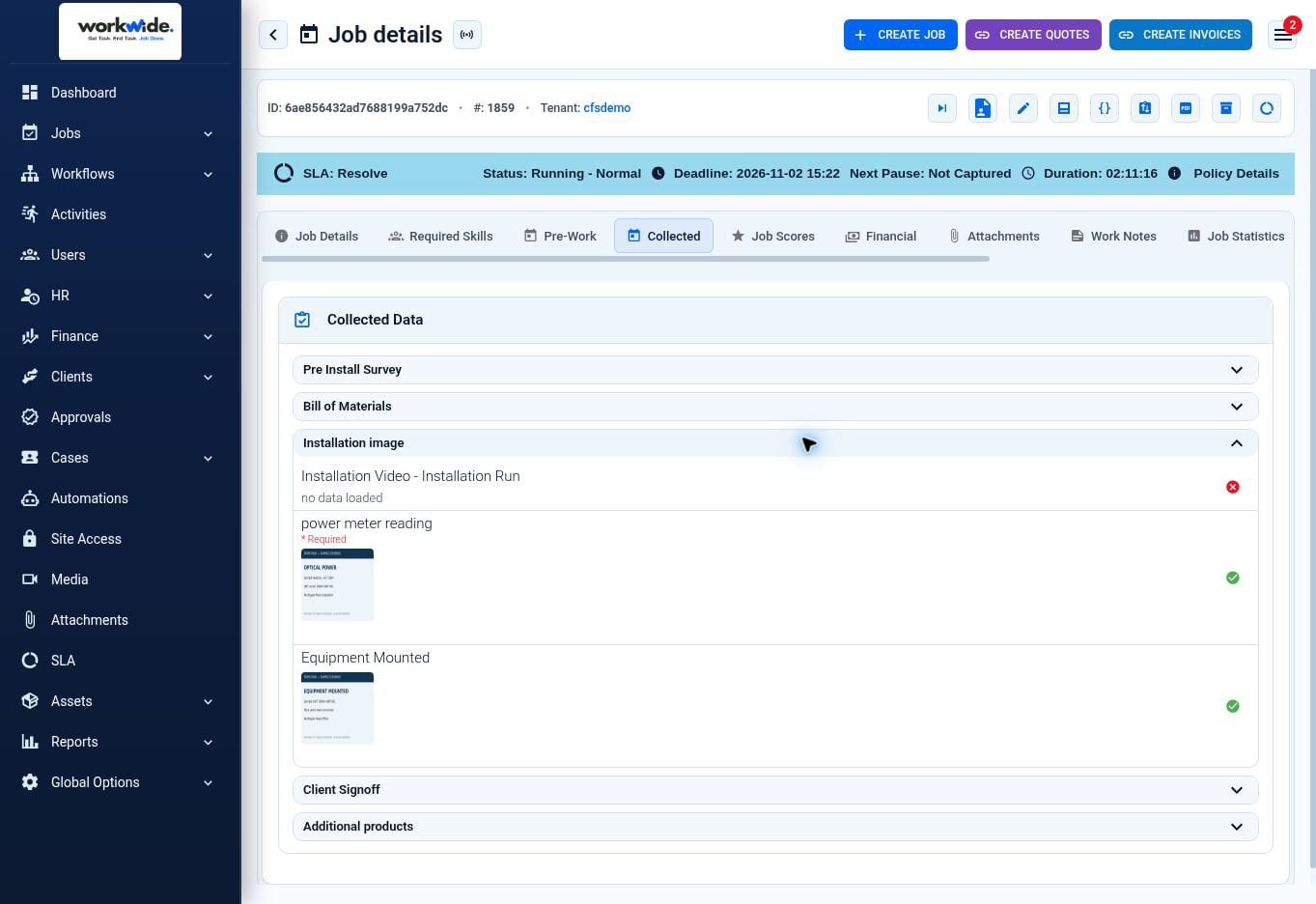
Photos and readings captured on site are saved to the job.
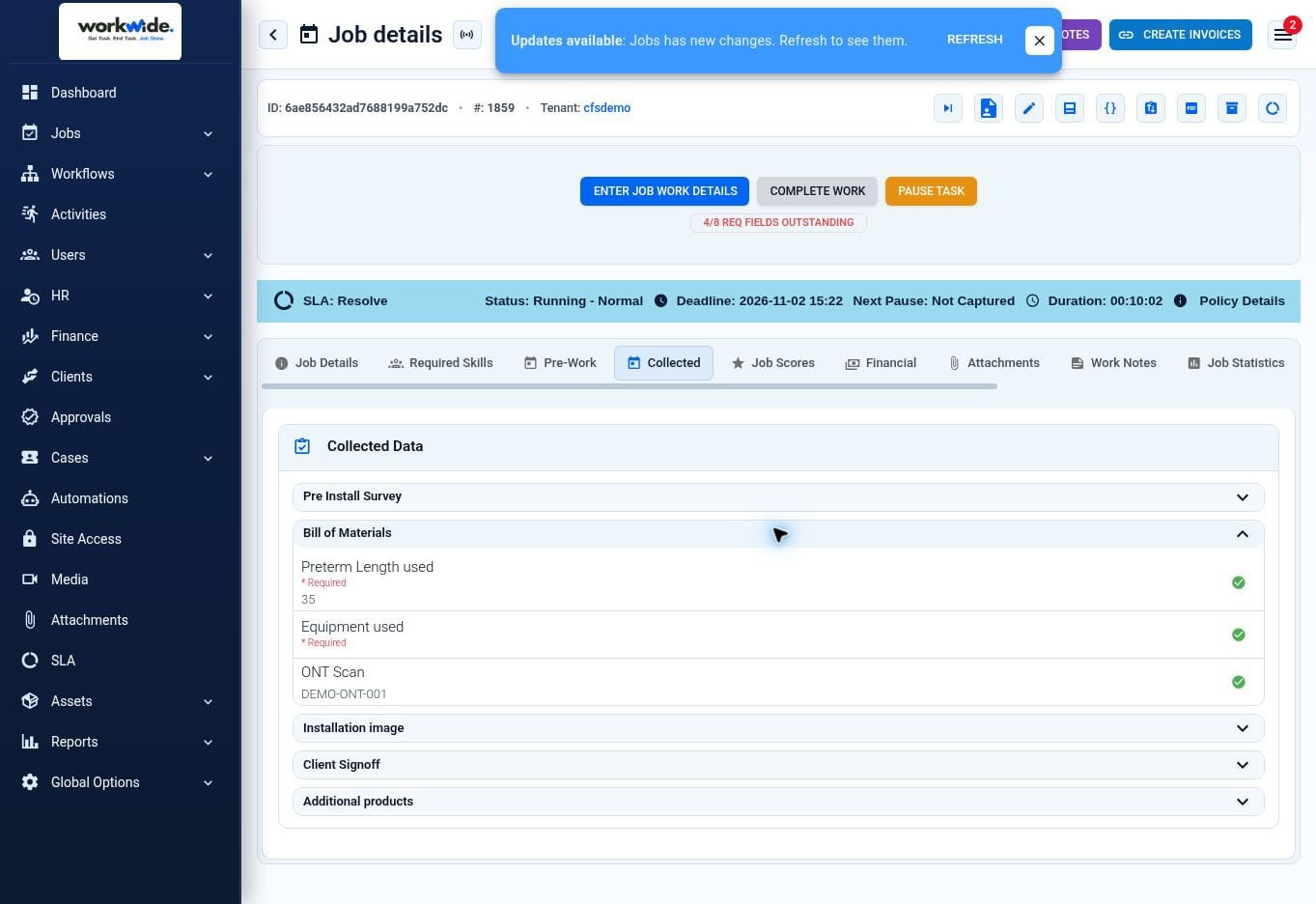
Every material used is recorded against the job.
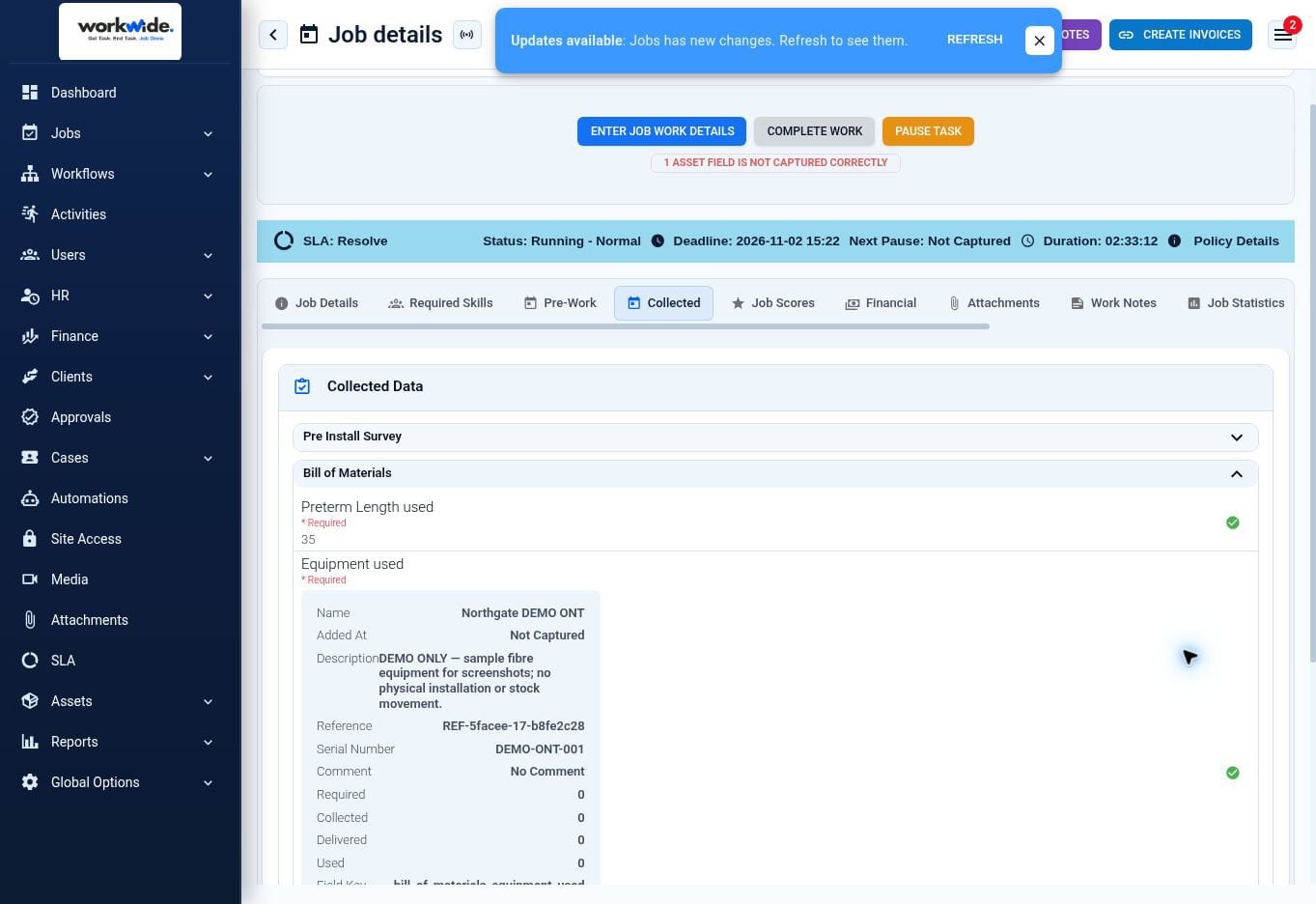
The equipment installed is selected and recorded on the job.
The fibre job carries its SLA from the moment it is logged.
Photos and readings captured on site are saved to the job.
Every material used is recorded against the job.
The equipment installed is selected and recorded on the job.
Screens from the WorkWide app and portal, shown with demonstration data.
A national fibre and wireless network services provider runs surveys, builds, installs, relocations, decommissions, IoT and wireless and fibre maintenance on WorkWide — for operator and wholesaler clients across the country.
network clients — operators and wholesalers — on one platform
technicians across 8 of South Africa’s 9 provinces
job types, from surveys to decommissions
of jobs created by integration — no manual job entry
On wireless and fibre maintenance calls, the median resolution is 16 hours, with more than a third resolved inside 8.
FTTx build, customer connections and civils, largely with subcontracted crews.
Connections, faults, maintenance and audits across provinces.
Customer installs, device swaps and in-home faults at volume.
Base station maintenance, power, transmission and audits.
A project system tracks the programme. This runs the individual job, in the field, offline.
Licensed and assigned exactly as your own technicians are, with the evidence coming back to your standard.
Restoration visible as it happens, not reconstructed when a penalty lands.
Jobs created by integration with what you already run, rather than re-typed by a coordinator.
Yes. The job card works offline and syncs when the phone is back in range.
Yes. They are licensed per user, exactly as an employed technician is, and assigned work the same way.
Yes — issued, allocated to a customer or site, and reconciled.
No. It detects the fault; we run the restoration and the record of who went and what they found.
No. We hold sites, equipment and the history of what was done to them, and integrate with what holds the design.
Yes, through the client portal.
Not today. That is on the roadmap.
By integration with your existing systems, by a client in the portal, or created directly.
If the answer is a message in a group chat, that is the problem.