
First-time fix
Return visits against the same machine — which only works when calls are captured against the machine rather than the building.
The machine, its contract and its whole service history in one place. The call dispatched with the parts identified before the technician leaves. The reading, the work and the proof captured on site.
And the only place they meet is on an invoice the client disputes. Meanwhile the most expensive thing in the business — the second visit — happens because somebody arrived without the machine’s history or the right part.
He got there and did not have the part. It is the biggest cost in the business, and the client sees every one of them.
It was moved to the second floor. Or to another branch. Wrong billing, wrong site, wrong technician sent.
So the month gets estimated again, and the client either queries it or quietly stops trusting the invoice.
“Ask Sipho, he knows that machine.” When Sipho leaves, so does the machine’s history.
Delivered and installed at a client site, against a contract, by serial number.
Calls arrive from the client portal, by email or from your desk, and are dispatched by skill and area.
The technician arrives with the machine’s history and the parts identified, and completes the job card on the phone.
Meter readings captured on the job. Consumables issued against the machine, not just the site.
Preventative services generated from the machine’s own schedule; relocations and swap-outs recorded as they happen.
The contract decides covered or chargeable, and at contract end the machine is accounted for.
And it works offline — basements, plant rooms and buildings with no signal sync when the phone is back in range.
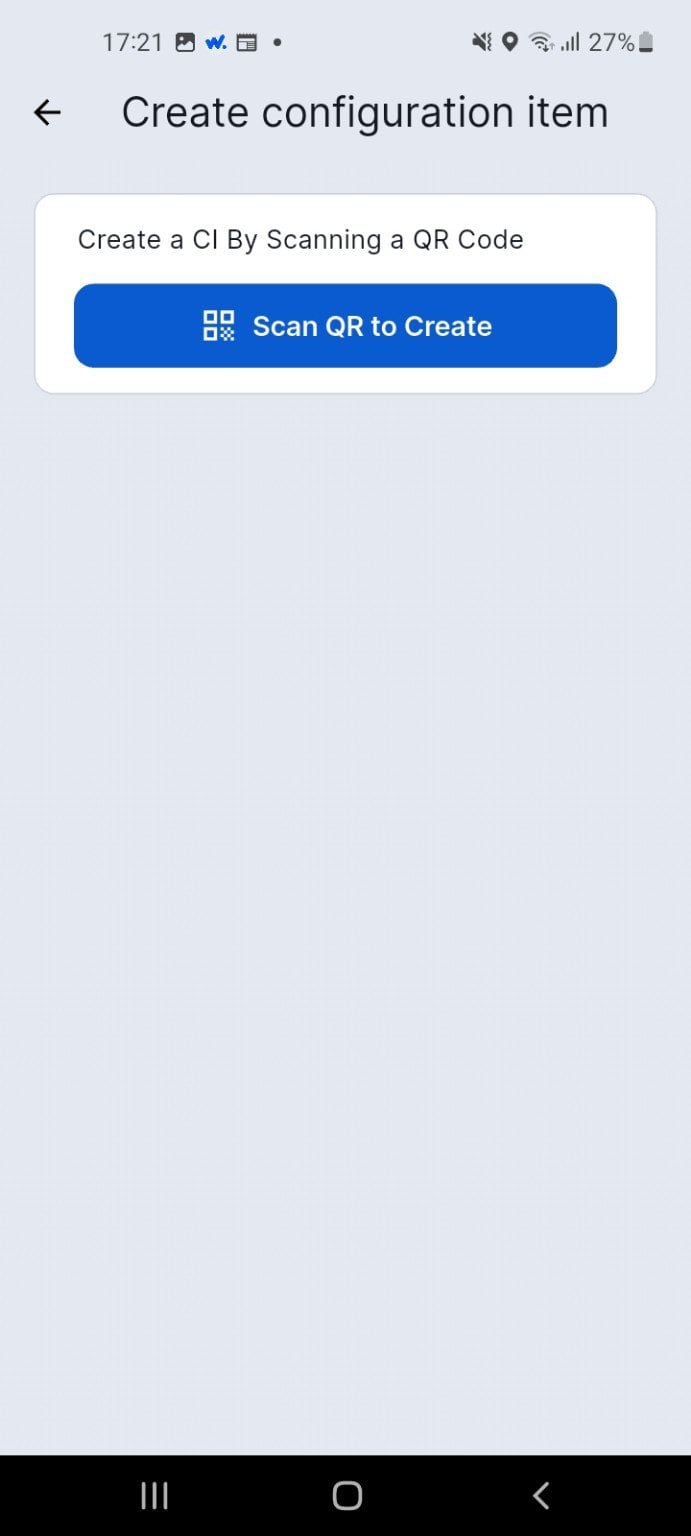
Each machine is a configuration item, created on the phone or from its QR tag.
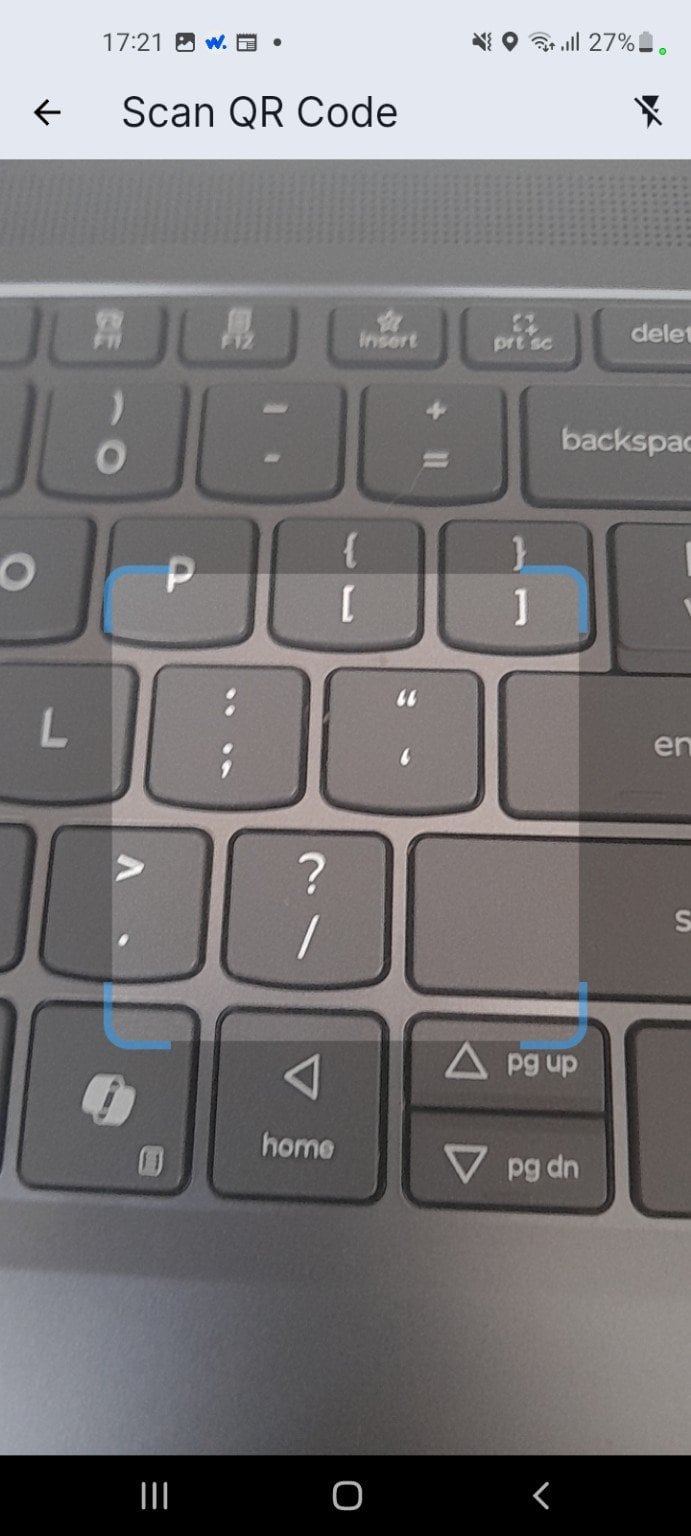
The phone's camera reads the machine's QR code to bring up its record.
Each machine is a configuration item, created on the phone or from its QR tag.
The phone's camera reads the machine's QR code to bring up its record.
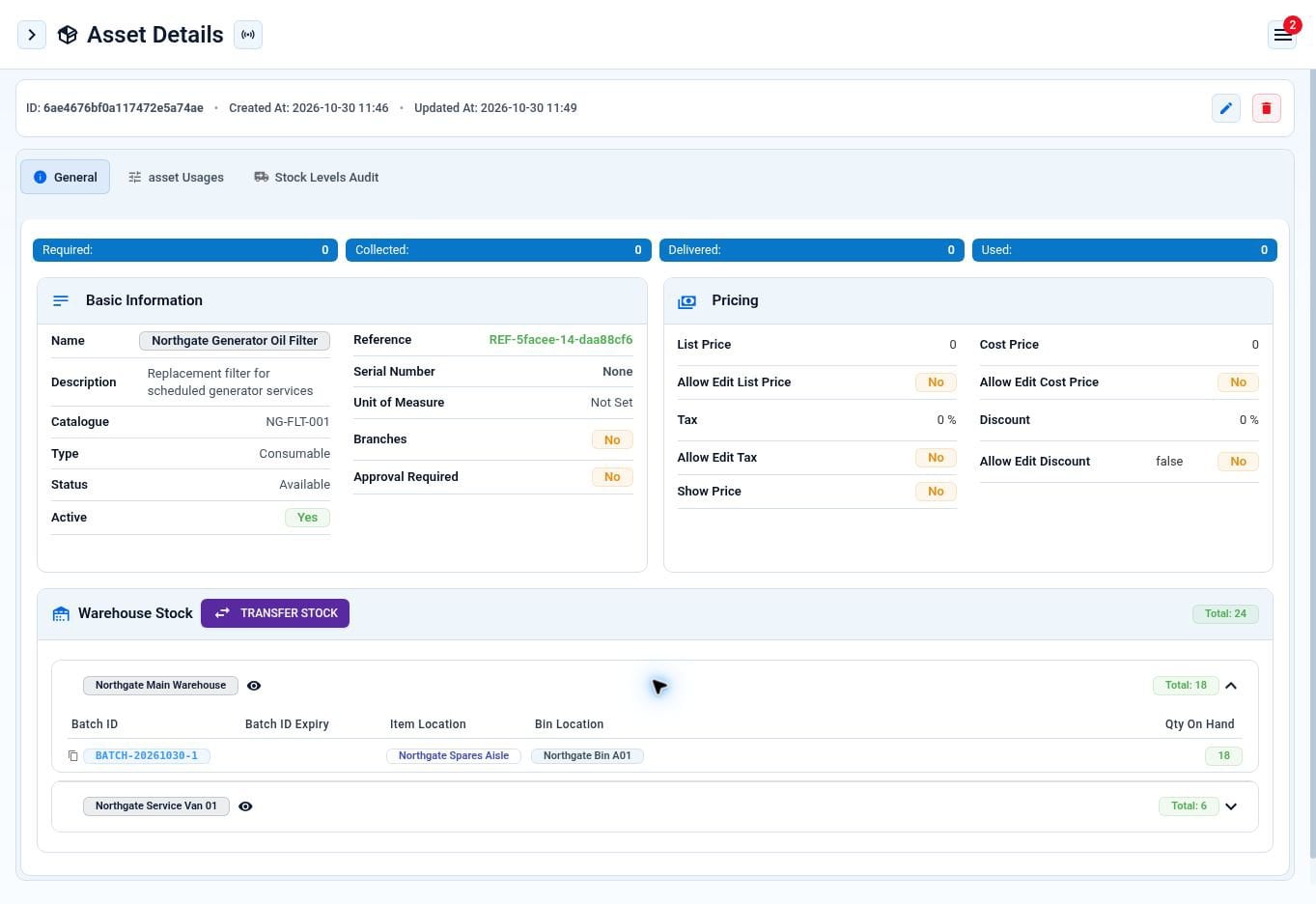
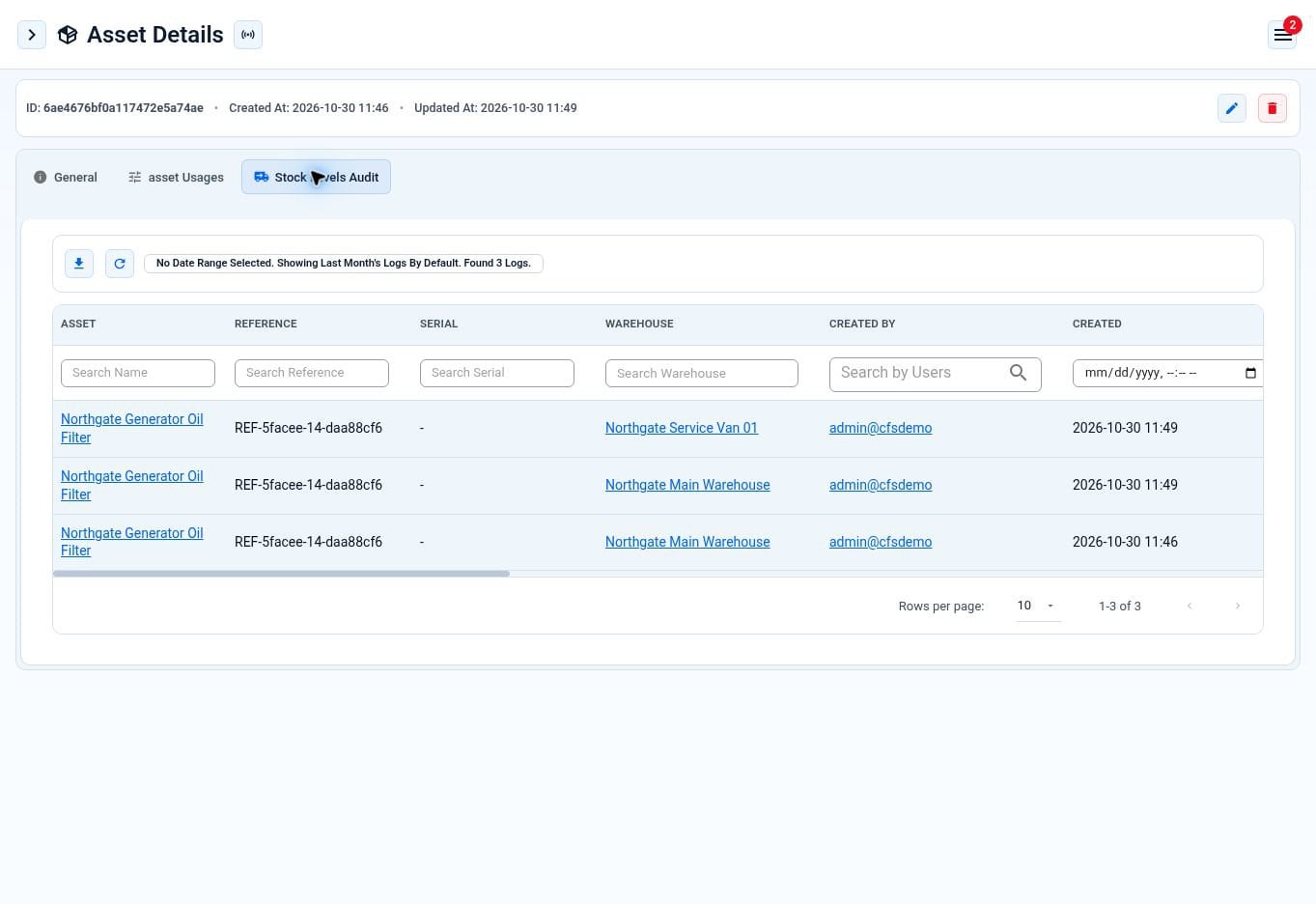
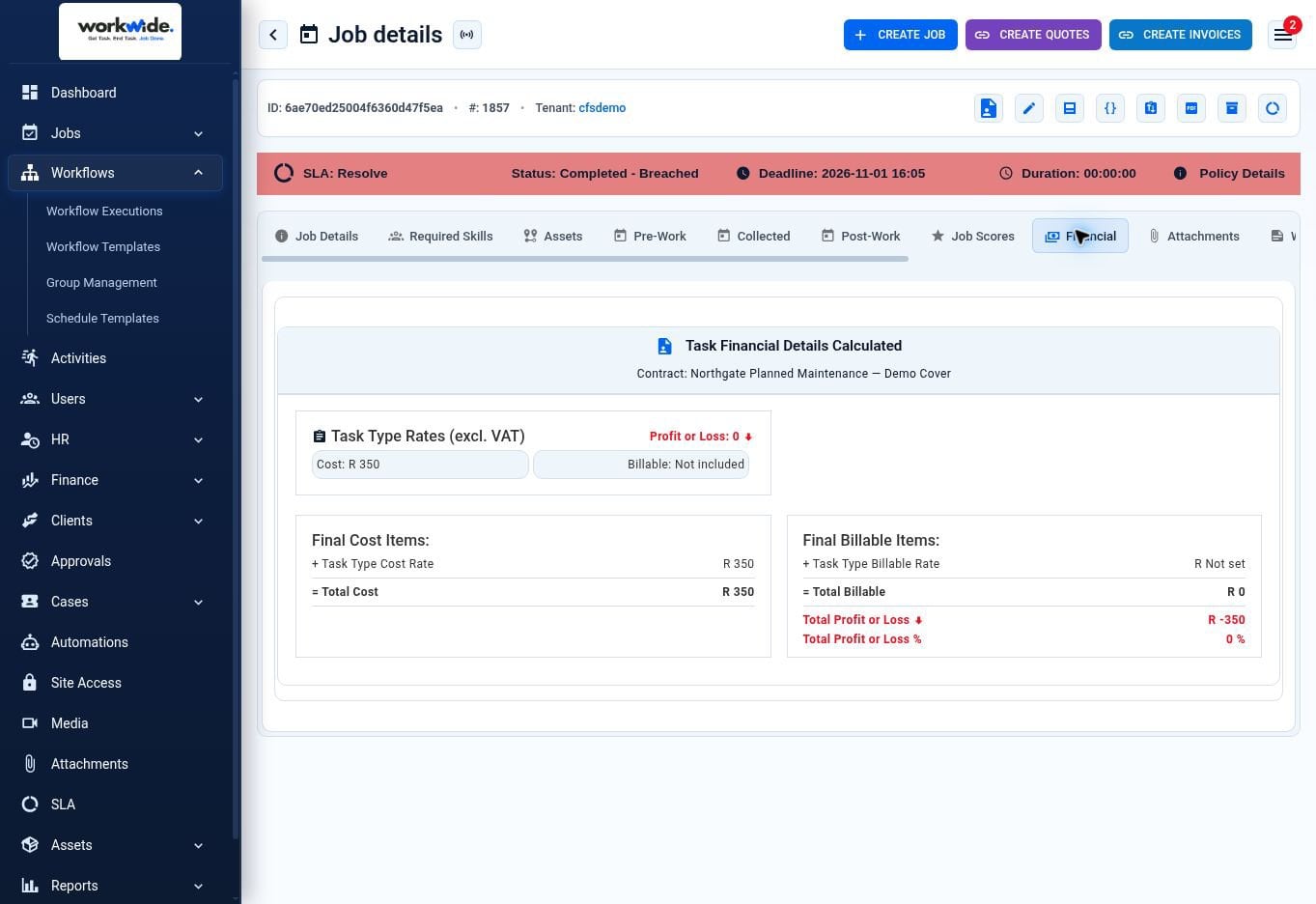
Screens from the WorkWide app and portal, shown with demonstration data.
Nashua run their field service operation on WorkWide — across South Africa, Namibia, Botswana, Eswatini and Lesotho, serving roughly 33,000 customer sites from about 40 branches.
field jobs a year on one platform
technicians across 5 countries and ~40 branches
median time to resolve, 71% inside 24 hours
of jobs closed in real time from the field
And more than 5,700 of those jobs were raised automatically by device alerts rather than by a customer phoning in — resolving in about two hours against three and a half for the rest. The median held between 3.4 and 3.7 hours every month while volume grew 18%.
Return visits against the same machine — which only works when calls are captured against the machine rather than the building.
Which units generate the calls, and which contracts are unprofitable because of them.
What arrived, what is outstanding, and what is about to be estimated.
One configuration and one job card, so performance is finally comparable.
Machines placed under rental and service contracts, serviced by your own technicians.
The same operation across branches or independent dealers, on one standard.
Fleets managed inside client organisations and billed on volume.
Telephony, connectivity, CCTV, backup power, coffee and water — one visit, one record.
Serial, site, contract, readings, parts and full history — not three systems that disagree.
The call carries the history and the parts required, and the van’s stock is known before anyone travels.
Covered, chargeable or out of scope, settled when the call is raised rather than after the visit.
The same job card and the same reports everywhere, so performance can be compared.
Only if you want us to. Many dealers keep theirs and run the field half here; others consolidate once they see one record work.
By the technician on the job, against that machine.
Readings for billing are captured by the technician on the job. Raising jobs automatically from device alerts is different, and that does run in production — as an integration we scope and build per client.
Yes, where the devices raise alerts. At Nashua more than 5,700 jobs in six months came from device alerts rather than customer calls, and they resolved faster than call-ins.
Yes — against the machine, not just delivered to the building.
The move is recorded on the job, so the record follows the machine.
Yes. Return visits against the same machine are reportable.
Yes, and syncs when the phone is back in range.
Yes. Billable work and readings can be passed into the finance system you already run.
If nobody can answer that, it is costing more than you think.